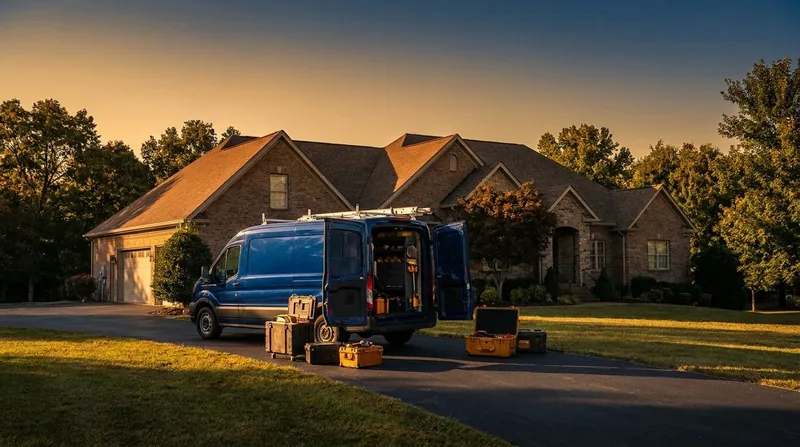
How to Start a Pest Control Business in Missouri
How to Start a Pest Control Business in Missouri
Starting a pest control business in Missouri requires careful planning, proper licensing, and understanding state regulations. Whether you plan to work independently or build a larger operation, Missouri has clear requirements for pesticide applicators and pest control companies. This guide walks you through every step from licensing to your first customers.
Understanding Missouri Pesticide Licensing
Missouri requires anyone applying pesticides commercially to hold an active pesticide applicator license. The state manages this through the Missouri Department of Agriculture's Bureau of Pesticide Control. A commercial applicator license costs $65 and is renewed every year, and your certification must be renewed every three years.
You must maintain certification in the CORE category plus any specialized categories you plan to work in. CORE certification covers general pesticide safety, application methods, and regulations that apply to all pesticide work. Specialized categories include structural (indoor/outdoor pest control), agricultural, turf and ornamental, and others depending on your business focus.
For structural pest control (the most common entry point), Missouri regulations at 2 CSR 70-25.070 (effective January 1, 2025) specify three qualification pathways. For the structural categories (7A, 7B and 7C), you can qualify with an associate degree in a related science, or one year of structural pesticide application experience, or an approved correspondence course plus six months of experience.
Exam Requirements and Testing
Your pesticide applicator license requires passing an exam administered by Pearson VUE, the state's contracted testing provider. The exam covers CORE material and your chosen specialty categories. Each category has its own exam section that you must pass.
Study manuals for the CORE and category exams are available through University of Missouri Extension Publications, and many pest control companies offer training programs that prepare you for the exam. Exam fees vary by category and testing location (verify current cost with the Department of Agriculture or Pearson VUE, as fees change periodically).
You must score at least 70 percent to pass each exam section. Many people take the exam multiple times before passing. Budget several weeks for studying, and consider joining study groups or taking online courses that cover the material systematically.
Getting Your Missouri Pest Control License
After passing your exam, submit your application to the Missouri Department of Agriculture's Bureau of Pesticide Control. Include your exam scores, proof of payment for the $65 annual fee, and any documentation required for your chosen qualification pathway (degree, training certificate, or field experience hours).
Once approved, you receive your license number and certificate. You must carry this license and identification when working. If you work for someone else, your employer's business must also hold appropriate licenses and be properly registered.
Plan to renew your license every three years. Your certification in CORE and every category must be renewed every three years, either by attending an approved recertification program or by re-examination.
Bonding and Insurance Requirements
Missouri requires pest control businesses to maintain either a surety bond or liability insurance covering pesticide application work. The minimum coverage is $50,000 per occurrence. This protects customers if your work causes property damage or bodily injury.
A surety bond requires a surety company's approval, while liability insurance generally provides broader protection. Premiums for either vary with your coverage, services and claims history, so get quotes before you budget.
Get quotes from multiple insurance providers. Many specialize in pest control and understand industry-specific risks. Submit proof of your insurance or surety bond to the Department of Agriculture as evidence of financial responsibility, and maintain continuous coverage. Lapses in coverage can result in license suspension.
Registering Your Business in Missouri
You must choose a legal business structure: sole proprietorship, partnership, LLC, or corporation. Most new pest control operators choose an LLC (Limited Liability Company) for liability protection at reasonable cost.
To form an LLC in Missouri, file Articles of Organization with the Missouri Secretary of State. The filing fee is $50. You can file online at https://bsd.sos.mo.gov/. Online filings are generally processed immediately. You do not need an annual report for LLCs in Missouri, which simplifies ongoing compliance.
If you use a business name different from your legal name or your LLC name, file a Fictitious Name registration (also called a "Doing Business As" or DBA) with the Missouri Secretary of State for $7.00. This registers your trade name, but it does not give you exclusive rights to it or prevent others from using it.
Obtain an Employer Identification Number (EIN) from the IRS, even if you have no employees initially. This is free and takes minutes online at irs.gov. You need this for banking, taxes, and insurance.
Understanding Missouri Tax Obligations
Missouri has multiple tax requirements for pest control businesses. Pest control services are not among the services Missouri taxes, but the state sales tax rate of 4.225 percent (plus local taxes) applies if you sell tangible products at retail. If you do, register for a retail sales license with the Department of Revenue at https://dor.mo.gov/register-business/ before collecting tax from customers.
Individual income tax is graduated with a top rate of 4.70 percent on business income reported through a sole proprietorship or partnership. If you form an LLC taxed as a corporation, Missouri corporate income tax is 4 percent. Keep careful records of all business expenses for deductions.
You must file Missouri income tax returns annually, typically by April 15. Federal self-employment tax (Social Security and Medicare) is owed on profits from a sole proprietorship, partnership or default-taxed LLC. Missouri estimated tax payments are required if you expect to owe at least $100 in Missouri income tax for the year.
Missouri has no general state business license, but check with your city or county for any local requirements. Some municipalities require business registration, occupancy permits, or contractor licenses that may apply to your operation.
Equipment and Supplies Setup
Start with essential equipment: a calibrated backpack or handheld sprayer (cost: $300 to $1,000), personal protective equipment including respirator, gloves, and protective clothing ($200 to $500), and a well-stocked vehicle for storage and transport ($2,000 to $5,000 initially for used van or truck setup).
Source pesticides from licensed distributors only. Maintain inventory records showing what you purchase, use, and stock. Build relationships with two or three suppliers for reliability and competitive pricing. Budget for ongoing supply costs, which typically run 20 to 30 percent of service revenue.
Invest in tools for inspections: flashlight, moisture meter, thermometer, and documentation equipment. As you grow, add specialized equipment for specific services like termite inspection or rodent control.
Setting Up Operations and Customer Systems
Develop a simple system for scheduling appointments, documenting work performed, and collecting payment. Start with a spreadsheet or free scheduling app before investing in expensive software. Track the property address, pest type, treatment applied, pesticide name and amount used, application date, and customer name.
Create a simple invoice template showing your business name, license number, date, customer information, services performed with costs, and payment terms. Always provide customers with treatment documentation including what was applied where and any safety precautions they should take.
Maintain detailed records for compliance. Missouri requires documentation of pesticide applications showing what was used, where, when, how much, and for what target pest. Keep these records for at least three years. They protect you if questions arise and demonstrate compliance with regulations.
Establish a safety protocol for yourself and any employees. All applicators must have current licenses. Never rush a treatment to cut costs. Proper application takes time and builds your reputation.
Marketing Your Pest Control Business
Start locally with family, friends, and neighbors. Ask satisfied customers for referrals. Build a simple website showing your services, license number, and contact information. List your business on Google My Business, Yelp, and local directories for free online visibility.
Consider door-to-door marketing in neighborhoods with pest problems. Post flyers at local businesses. Join your local chamber of commerce. Advertise in neighborhood newsletters or community Facebook groups with honest pricing and professional presentation.
Develop a standard pricing structure based on the pest type, property size, and treatment complexity. Competitive pricing in Missouri typically ranges from $150 to $400 per service call depending on the market. Offer annual contracts or quarterly maintenance plans for recurring revenue.
Compliance and Regulatory Responsibilities
Maintain current licensing for yourself and any employees. Attend continuing education annually to stay current on new products, regulations, and techniques. Violations can result in license suspension or permanent revocation.
Never exceed pesticide label application rates or use products for pests not listed on the label. This violates federal law and state regulations. Always follow integrated pest management principles: use pesticides as part of a broader strategy including sanitation, exclusion, and mechanical controls.
Properly store, transport, and dispose of pesticides. Never leave pesticides in customer homes or yards. Maintain a current inventory of what you stock. Report any spills or accidents to your insurance company immediately.
If you hire employees who apply pesticides, each needs either a commercial applicator certification or a $35 pesticide technician license, and technicians must work under the direct supervision of a certified commercial applicator from the same business location. Verify their licenses quarterly. Maintain detailed records of their work. You are responsible for compliance by anyone working under your company.
Avoiding Common Mistakes
Do not start pest control work before obtaining your license. Operating without proper licensing results in substantial fines and criminal charges. Waiting for your license, though frustrating, protects your business legally.
Do not skip the bonding or insurance step. This is not optional and not expensive relative to your potential liability. One customer injury or significant property damage claim can bankrupt an uninsured operator.
Do not underprice your services just to get customers. You need profit margin to reinvest in equipment, training, insurance, and growth. Pricing too low attracts customers you cannot serve profitably and damages your reputation when you cut corners to survive.
Do not misrepresent your experience or licenses to customers. Build trust through honest communication about what you can and cannot do. Growing slowly with integrity is far better than fast growth built on misrepresentation.
Do not neglect record-keeping. Documentation protects you in disputes with customers, proves regulatory compliance, and is essential for tax filing. Invest 30 minutes daily in documentation.
Disclaimer
This article provides general informational content about starting a pest control business in Missouri. It is not legal, tax, or professional advice. Before starting your business, consult with a licensed attorney about business structure, a qualified accountant about tax obligations, and the Missouri Department of Agriculture about current licensing requirements and fees. Regulations change, and professional guidance ensures your business complies with all applicable laws.
Keep exploring: related Missouri guides
- How to Start a Lawn Care Business in Missouri
- How to Start a Cleaning Business in Missouri
- How to Start a Junk Removal Business in Missouri
- Missouri Contractor License
- How to Start an LLC in Missouri
- Missouri Business License
- How Much Does It Cost to Start a Business in Missouri
- All Missouri business types
- Every Missouri guide in one place