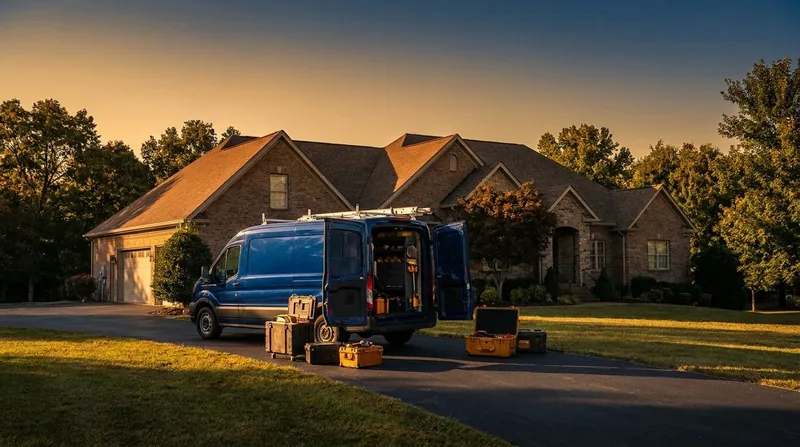
How to Start a Cleaning Business in Missouri
How to Start a Cleaning Business in Missouri
Starting a cleaning business in Missouri is straightforward. Unlike many service industries, Missouri does not require a state-level business license or statewide contractor license for cleaning services. This means you can focus on what matters: building a reliable service, growing your client base, and managing your operations. But straightforward does not mean you skip the essentials. You still need to register your business, understand your tax obligations, carry insurance, and comply with local city requirements.
This guide walks you through each step, from choosing your business structure to acquiring equipment and attracting your first clients. You will learn what Missouri requires, what your city may require, and what business practices will help you succeed.
Why Start a Cleaning Business in Missouri?
Missouri's lack of a statewide business license is a real advantage. You will not waste time or money on state-level licensing hoops that many other states impose. The state population of over 6 million people, spread across major cities like Kansas City, St. Louis, Springfield, and Columbia, means steady demand for both residential and commercial cleaning services. Residential cleaners, office cleaners, post-construction crews, and specialized janitorial services all find reliable work in Missouri.
That said, your city or county will have its own requirements. Kansas City and St. Louis use different fee structures, and each has specific rules. We will cover how to find and comply with your local rules.
Choose Your Business Structure
Before you register anything, decide whether you will operate as a sole proprietorship, a limited liability company (LLC), or a corporation. Most small cleaning businesses start as a sole proprietorship or an LLC.
Sole Proprietorship
A sole proprietorship is the simplest and cheapest option. You are the business. No separate filing is required with the Missouri Secretary of State. You simply use your own name or file a fictitious name (also called a "doing business as" or DBA) if you want to use a different business name. A fictitious name registration costs $7.00 and is filed with the Secretary of State. You pay taxes on business income as personal income, reported on your individual tax return. The downside is that your personal assets are not protected if the business is sued.
Limited Liability Company (LLC)
An LLC separates your personal assets from business liability. If a client is injured or sues the business, your personal savings and home are typically protected. In Missouri, filing an LLC costs $50 and takes about five minutes online through the Missouri Secretary of State portal. The filing requires a simple one-page form (Articles of Organization, Form LLC-1) and an LLC name. Your LLC name must include "LLC," "Limited Liability Company," "LC," or "L.L.C." Missouri LLCs do not file annual reports and do not owe ongoing fees to the Secretary of State. Income passes through to you as the member, taxed at Missouri's personal income tax rates, which top out at 4.70 percent for tax year 2026.
Corporation
Incorporating is overkill for most cleaning startups. It costs $58 to file and requires annual registration reports (fee $20, due in the month of incorporation). Most cleaning businesses outgrow the complexity without ever needing corporate status.
For most cleaning business owners, an LLC is the best balance of protection, cost, and simplicity. If you prefer to keep it even simpler and do not need liability protection, a sole proprietorship with a DBA works fine.
Register Your Business: Step-by-Step
Step 1: Choose and Check Your Name
If you are forming an LLC, your chosen name must be distinguishable from all other LLCs, corporations, and similar entities already registered with Missouri. Search the Missouri Secretary of State's business entity database at https://bsd.sos.mo.gov/BusinessEntity/BESearch.aspx?SearchType=0 to confirm your name is available. You can also reserve a name for 60 days (renewable for two additional 60-day periods, up to 180 days total) for $25 if you want to lock it in while you plan.
If you choose a sole proprietorship with a fictitious name, searching first is a good idea, but a Missouri fictitious name registration does not give you exclusive rights to the name.
Step 2: File Your Business Registration
For an LLC, go to https://bsd.sos.mo.gov/ and use the Missouri Business Filings portal to submit your Articles of Organization. The form takes less than five minutes. Pay the $50 filing fee. Online filings are typically processed immediately. You will receive a confirmation email with your entity number.
For a sole proprietorship with a DBA, file the Registration of Fictitious Name (Form Corp. 56) with the Missouri Secretary of State. The fee is $7.00. This can also be done online through the same portal.
Step 3: Obtain a Federal Employer Identification Number (EIN)
Even if you are a sole proprietor, getting an EIN is wise. It keeps your business finances separate from your personal social security number, protects your privacy, and is required if you hire employees or open a business bank account. Apply free at https://www.irs.gov/ein. The process takes about 15 minutes online and your EIN is issued immediately.
Step 4: Register for Missouri Taxes
Cleaning services themselves are not subject to Missouri sales tax under RSMo 144.020. However, if you sell cleaning products or supplies separately to clients (not bundled as part of your service), those goods are taxable. Register with the Missouri Department of Revenue at https://dor.mo.gov/register-business/ to obtain a sales tax license. You will provide your business name, address, and entity type. Registration is free. The state sales tax rate is 4.225 percent, but your city may add local sales tax on top of that.
You must also register for payroll withholding if you hire employees, and register for unemployment tax with the Missouri Division of Employment Security.
Get Licensed and Comply with Local Requirements
Missouri does not issue a statewide general business license or statewide janitorial license for cleaning services. However, most cities require a local business license and charge a fee. The structure and amount of the fee vary by location.
Kansas City and St. Louis
Kansas City and St. Louis have the most developed licensing frameworks. Kansas City's business license fee is based on gross receipts. St. Louis uses employee count to determine the fee tier. Both cities publish fee schedules, so contact your city's business licensing office to learn the exact fee and requirements for your specific business type (residential cleaning, commercial janitorial, post-construction cleanup, etc.).
Other Missouri Cities and Counties
Most other municipalities require a local business license but the process and fees are simpler. Check your city or county clerk's office website or call them directly. Fees vary widely by city, so confirm the amount with your local authority rather than assuming.
Workers Compensation Insurance
Missouri requires workers compensation insurance if you have five or more employees. If you are the sole operator or have fewer than five employees, you are not required to carry it by state law. However, many commercial clients (especially offices and facilities management companies) will require you to carry workers compensation as a condition of the contract, regardless of your employee count. It is smart to get a quote early and factor it into your pricing.
Obtain Insurance
You need at least general liability insurance. This covers bodily injury and property damage claims. If a client trips and falls at their home or office, or if your equipment damages their floor, liability insurance protects you and the client.
General liability insurance for a cleaning business typically costs $300 to $600 per year for a sole operator or very small crew. Get quotes from 2 to 3 insurance brokers. Many insurers specialize in service businesses and understand cleaning operations. Mention that you do residential and/or commercial cleaning, what types of equipment you use, and how many employees you have. The quote will reflect your risk profile.
Once you have five or more employees, you must carry workers compensation. If you own or operate a vehicle used for the business (a van or truck stocked with equipment), add commercial auto insurance.
Set Up Your Equipment and Supplies
Your startup costs depend on your business type. Residential house cleaning requires less equipment than commercial janitorial or post-construction cleanup.
Essential Equipment and Supplies
- Microfiber cloths, mops, brooms, dustpans, and brushes: $50 to $150
- Vacuum cleaner or commercial upright/backpack model: $200 to $1,000
- Mop bucket and wringer or microfiber mop system: $30 to $100
- Cleaning solutions: all-purpose cleaner, glass cleaner, bathroom cleaner, floor cleaner, disinfectant: $50 to $150
- Safety equipment: gloves, safety glasses, masks if needed: $20 to $50
- Ladder: $30 to $100 (if you clean windows)
- Caddy or cart to carry supplies: $20 to $50
- Personal protective equipment for deeper chemical work: $30 to $100
Budget $500 to $2,000 for initial equipment, depending on how many clients you plan to service at once. As you grow and hire employees, each crew member will need their own set of tools and supplies.
Optional But Useful
A pickup truck or van ($15,000 to $30,000 for a used model) makes it easier to haul equipment and supplies to jobs. A pressure washer ($300 to $1,500) opens doors to exterior cleaning and post-construction work. Specialized equipment (carpet cleaning machines, floor buffers) can be rented initially to test demand before buying.
Estimate Your Pricing and Profitability
Residential house cleaning in Missouri typically ranges from $100 to $300 per house, depending on size and frequency. A 2,000 square foot home takes about 2 to 4 hours for thorough cleaning. Commercial janitorial contracts are often bid on square footage per day or week. Weekly office cleaning might cost $0.10 to $0.30 per square foot. A 5,000 square foot office at $0.15 per square foot equals $750 per week.
Your profitability depends on your efficiency, how many jobs you can do per week, your material costs, and your overhead. A single operator cleaning 4 residential homes per week at $150 each generates $600 in revenue. After equipment maintenance, supplies, gas, and insurance, your net income might be $250 to $400 per week to start, rising as you refine your process and raise rates.
Tips and Common Mistakes to Avoid
Do Invest in a Business Bank Account
Mixing personal and business money makes taxes harder and clouds your actual profitability. Open a business checking account at a local bank or online bank. Most require an EIN and your registration documents. Fees are typically $10 to $20 per month.
Do Get Referrals and Reviews Early
Word of mouth is the cheapest marketing. Offer a small discount to your first 5 to 10 clients in exchange for permission to list their names as references. Ask happy clients for Google reviews and Yelp listings. These drive more business than paid ads in many markets.
Do Not Skip the Liability Insurance
Many new cleaning operators think they can skip insurance to save money. A single injury lawsuit can cost $10,000 to $50,000 even if you win. Insurance is cheap compared to that risk.
Do Not Undercharge
A common mistake is pricing too low to beat the competition. You will burn out, attract low-quality clients, and still struggle to profit. Charge what you are worth. The right clients will pay it.
Do Not Ignore Local Requirements
Even though Missouri has no statewide license, ignoring your city's business license requirement can result in fines or inability to get a business loan or dispute resolution later. File for your city license.
Do Track Your Expenses
Save all receipts for supplies, equipment, gas, insurance, and vehicle maintenance. These are deductible business expenses. At tax time, detailed records save you money and avoid IRS trouble.
Expected Results and Realistic Timeline
In your first month, expect to sign 2 to 5 clients as you build reputation and referrals. By month three, most cleaning operators report 8 to 15 active clients (a mix of one-time and recurring). By month six, if you are marketing consistently and delivering quality work, you could have 20 to 30 recurring clients and be considering whether to hire help.
Profitability typically appears in month two or three. Many operators break even or profit modestly in the first six months, then see profit grow as client load expands and efficiency improves. If you hire an employee, your profit margin per hour drops initially because you are now paying labor, but your total revenue and profit can grow faster.
Informational Disclaimer
This article is informational and does not constitute legal, tax, or business advice. The facts presented about Missouri registration, fees, and tax treatment are accurate as of October 2026, but laws and requirements change. Before you file or spend money, consult a Missouri attorney if you have questions about liability, contracts, or employment law. Consult a certified public accountant (CPA) or tax professional to understand your federal and state tax obligations, especially if you hire employees or operate in multiple cities. The Missouri Small Business Development Center at https://sbdc.missouri.edu offers free counseling and training for entrepreneurs. The Small Business Administration (SBA) serves Missouri through its St. Louis district office (eastern Missouri) and Kansas City district office (western Missouri).
Keep exploring: related Missouri guides
- How to Start a Pest Control Business in Missouri
- How to Start a Junk Removal Business in Missouri
- How to Start a Lawn Care Business in Missouri
- Missouri Contractor License
- How to Start an LLC in Missouri
- Missouri Business License
- How Much Does It Cost to Start a Business in Missouri
- All Missouri business types
- Every Missouri guide in one place