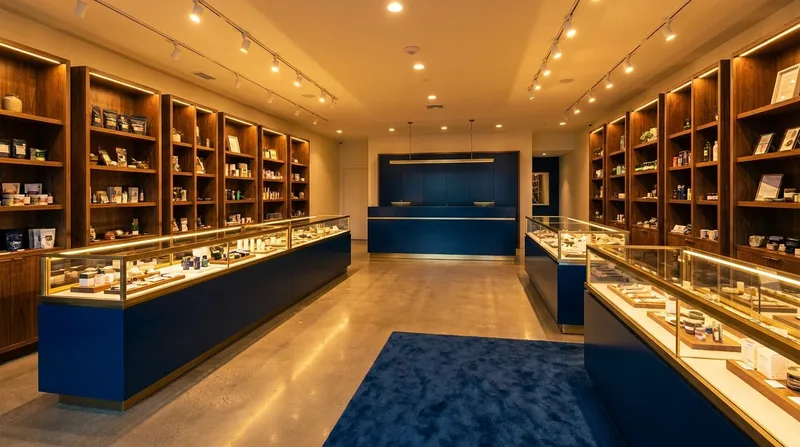
How to Open a Dispensary in Missouri: Microbusiness Licenses Explained
How to Open a Dispensary in Missouri: Microbusiness Licenses Explained
Opening a cannabis dispensary in Missouri requires navigating a highly regulated licensing system overseen by the Missouri Department of Health and Senior Services (DHSS) Division of Cannabis Regulation. If you're interested in starting a marijuana business in Missouri, you'll encounter two main pathways: the microbusiness license and the comprehensive dispensary license. This guide walks you through what you need to know, how to apply, what it costs, and what to expect throughout the process.
Understanding Missouri's Cannabis Licensing Framework
Missouri legalized cannabis for adult use through Amendment 3, passed in 2022. The state's regulatory structure is managed by the DHSS Division of Cannabis Regulation, which issues licenses through a competitive lottery system. This means you cannot simply pay a fee and open a dispensary. Instead, you enter a lottery draw, and your name must be selected to move forward.
The state has created 144 total microbusiness licenses to be distributed across Missouri's 8 congressional districts (18 licenses per district). This geographic distribution ensures that cannabis businesses are not concentrated in a few metro areas. If you're serious about opening a dispensary, you need to understand which congressional district you're in and what the competition looks like in that region.
Microbusiness License vs. Comprehensive Dispensary License: What's the Difference?
Missouri offers two paths into the cannabis retail market, and they serve different types of operators.
Microbusiness License: A microbusiness license allows you to operate a smaller cannabis retail location. Microbusiness licenses are limited to applicants who meet Amendment 3's eligibility criteria, such as limited net worth and income, service-disabled veteran status, or other qualifying circumstances. The application and annual fees are lower than comprehensive dispensaries, making this the more accessible entry point for many business owners.
Comprehensive Dispensary License: A comprehensive dispensary represents a larger retail operation with higher capacity and broader operational scope. The application and annual fees are substantially higher, and as of 2026, new comprehensive dispensary applications have closed to new applicants. This path is not available unless and until the state reopens applications.
For most aspiring business owners, a microbusiness license is the realistic option available right now.
Step-by-Step: How to Apply for a Microbusiness License in Missouri
Step 1: Verify Your Eligibility and Congressional District
Before you invest time and money in an application, confirm that you meet Missouri's basic eligibility requirements. The DHSS Division of Cannabis Regulation publishes eligibility criteria on its official website. You'll need to identify your congressional district, as licenses are allocated 18 per district. The lottery system means that even if you meet all eligibility criteria, there is no guarantee you will be selected. In the most recent lottery draw held on September 9, 2026, 888 applications competed for approximately 77 available microbusiness licenses.
Check the DHSS Division of Cannabis Regulation website for the current microbusiness eligibility criteria, which every applicant must meet, and the specific requirements for your congressional district.
Step 2: Prepare Required Documentation
Your microbusiness license application will require extensive documentation. You will need to submit personal financial records, proof of identity, and detailed information about your business plan and proposed dispensary location. Expect to provide items such as the following; the application instructions list the exact requirements:
- Proof of residency and identity for all owners and principals
- Personal financial statements and tax returns (typically 2 to 3 years)
- A detailed business plan including operational procedures, security, and staffing
- Information about your proposed retail location (lease or proof of control)
- Documentation showing how each owner meets the microbusiness eligibility criteria
- Proof that your location complies with local zoning laws
- Security plan detailing surveillance, access controls, and record-keeping systems
Gather all of these materials before you submit your application. Incomplete applications are rejected, and reapplying means waiting for the next application window and lottery round.
Step 3: Submit Your Application During the Open Application Window
The DHSS Division of Cannabis Regulation opens application windows periodically. These are not always open, so you need to monitor the agency's website for announcement of when applications are being accepted. Applications are submitted online through the state's portal. During the application window, you will enter all required information, upload supporting documents, and pay the non-refundable application fee.
As of 2026, the microbusiness application fee is $1,637. This fee is due at the time of submission and is non-refundable, whether or not your application is selected in the lottery.
Step 4: Enter the Lottery Drawing
Once the application window closes, all submitted applications enter a lottery drawing. The most recent lottery, held on September 9, 2026, illustrates the scale of competition. The state received 888 applications for approximately 77 available microbusiness licenses. This means your odds of selection depend on the total number of applicants and how many licenses are available for your congressional district. Since licenses are allocated geographically (18 per district), the competition level varies by location.
You will receive notification from the state if your application is selected. If you are not selected, you do not move forward. You would need to wait for the next application window to reapply.
Step 5: Receive Your Microbusiness License
If your application is selected in the lottery and approved by the DHSS Division of Cannabis Regulation, you will receive your microbusiness license. DHSS has said licenses from the September 2026 lottery will begin issuing in December 2026. The timeline from lottery selection to license issuance varies, so do not assume immediate activation of your license.
Once licensed, you can begin operating your retail dispensary in accordance with all state regulations, including security, inventory tracking, and reporting requirements.
Costs of Opening a Microbusiness Dispensary in Missouri
Understanding the full cost of opening and operating a cannabis dispensary in Missouri is critical to your business planning. These are the state-level fees you will encounter.
Microbusiness Application Fee: $1,637 (non-refundable, paid at submission)
Microbusiness Annual Fee: $1,637 (paid annually and upon renewal)
Microbusiness Renewal Fee: $1,637 (same as annual fee)
These are state fees only. Your total startup and operating costs also include:
- Lease or purchase of a retail location
- Build-out and renovations to meet state security and operational standards
- Security systems (cameras, alarms, access controls, vault or safe)
- Inventory management software and track-and-trace compliance (Metrc system)
- Point-of-sale system and payment processing
- Insurance (general liability, product liability, and other required coverage)
- Staffing, training, and payroll
- Local permits and licensing (if your city or county requires them)
- Legal and accounting professional fees
Many operators find that non-state costs exceed state licensing fees by a significant margin. A realistic estimate for opening a small dispensary ranges from $250,000 to $500,000 or more, depending on your location and build-out requirements.
Timeline: How Long Does It Take to Open a Dispensary?
The timeline from application to opening is not quick. Here is a realistic breakdown:
Application Window to Lottery Drawing: 1 to 3 months (varies by state scheduling)
Lottery Drawing to License Notification: Varies (winners of the September 2026 lottery had not been made public as of early October 2026)
License Approval to Issuance: 1 to 3 months (starting December 2026 for the September 2026 lottery)
License Issuance to Retail Opening: 2 to 6 months (or longer, depending on buildout, local permits, and supply chain readiness)
Total timeline: Plan for 6 to 12 months or longer from initial application to opening day. This is not a quick process, and delays are common.
Key Requirements: What You Must Have to Operate
Beyond the application and fees, Missouri's cannabis regulations impose strict operational requirements on all dispensaries. You must:
- Comply with security standards: Install surveillance cameras, alarm systems, inventory tracking, and secure storage for cannabis products.
- Track inventory with Metrc: Missouri requires use of the state's Metrc track-and-trace system to monitor all cannabis from purchase to sale.
- Follow packaging and labeling rules: All products must be properly labeled with THC/CBD content, warnings, and required disclosures.
- Verify customer age: Implement a reliable system to check customer ID and ensure sales only to adults 21 and older.
- Maintain records: Keep detailed transaction records, staff training documentation, and compliance records for inspection.
- Comply with testing requirements: All cannabis products sold must be tested by a state-approved laboratory and pass safety standards.
- Adhere to purchase limits: Customers may purchase up to 3 ounces of cannabis in a single transaction (or as currently limited by state law).
These are not one-time tasks. Compliance is ongoing and is monitored through state inspections, testing, and reporting requirements.
Tips to Avoid Common Mistakes
Mistake 1: Applying for a location before confirming local zoning approval. Some cities and counties prohibit cannabis retail or restrict locations (distance from schools, residential areas, etc.). Before you commit to a lease or purchase, confirm that your intended location is legally compliant. Not all Missouri cities welcome cannabis businesses.
Mistake 2: Underestimating startup and operating costs. Many new operators focus on state licensing fees and overlook the significant costs of buildout, security systems, staffing, and insurance. Run detailed financial projections and secure adequate funding before you begin the application process.
Mistake 3: Missing application deadlines or submitting incomplete applications. The DHSS Division of Cannabis Regulation has strict submission windows. If you miss the deadline or fail to submit all required documentation, you will not be considered in that lottery round. Start your preparation months in advance.
Mistake 4: Failing to plan for inventory sourcing. If you are licensed as a microbusiness dispensary, you will need a reliable supply of cannabis products. Understand your sourcing options, cultivator relationships, and supply chain before opening.
Mistake 5: Not budgeting for legal and accounting support. Cannabis businesses operate in a complex regulatory environment. Hiring an attorney familiar with Missouri cannabis law and an accountant experienced in cannabis taxation is not a luxury, it is a necessity.
Expected Results and Realistic Revenue Expectations
If you successfully receive a microbusiness license and open a dispensary, what can you expect?
Revenue depends heavily on your location, the surrounding population, competition from other dispensaries, and your marketing effectiveness. Dispensaries in high-population areas with limited competition may achieve higher sales. Dispensaries in saturated markets or rural areas may struggle. First-year revenue ranges vary widely, but realistic operators plan conservatively and expect the first year to involve ramping sales as the business becomes established and known in the community.
Profitability is possible but not guaranteed. Your ongoing annual fee of $1,637 to the state is manageable, but your total operating expenses (rent, staff, utilities, insurance, compliance, testing) will be substantial. Many cannabis retailers operate on thin margins, meaning that controlling operating costs is critical to profitability.
Where to Find Official Information
For the most current and accurate information on Missouri cannabis licensing, refer directly to the official source:
- Missouri DHSS Division of Cannabis Regulation: Visit the official state website for application windows, eligibility requirements, fees, regulations, and license status updates. This is the authoritative source for all state-level requirements.
- Local City and County Offices: Contact your city or county clerk or planning department to confirm zoning compliance, local licensing requirements, and any local prohibitions on cannabis retail.
- Missouri Small Business Development Center (SBDC): A free resource that offers guidance on business planning, financial projections, and navigating regulations. Visit https://sbdc.missouri.edu.
Important Disclaimer
This article is informational only and does not constitute legal or tax advice. Cannabis law is complex and changes frequently. The information provided reflects the state of Missouri regulations and requirements as of October 2026, but regulations can change without notice.
Before you invest time and money into a cannabis business, consult with an attorney licensed to practice law in Missouri who specializes in cannabis law. A qualified attorney can advise you on eligibility, application strategy, local compliance, and ongoing regulatory obligations. Similarly, consult with a certified public accountant (CPA) or tax professional experienced in cannabis taxation to understand your tax obligations and plan accordingly.
Cannabis business remains federally illegal, and federal law imposes restrictions on banking, tax deductions, and other business operations for cannabis retailers. Professional guidance is essential to navigate these complex intersections of state and federal law.
Next Steps: Your Action Plan
If you are serious about opening a cannabis dispensary in Missouri, here is your action plan:
- Research your congressional district and local zoning rules. Contact your city and county offices to confirm that your intended location is eligible.
- Consult with a cannabis law attorney in Missouri to discuss your specific situation and eligibility.
- Work with a CPA to develop financial projections and understand tax obligations.
- Compile all required documentation and build out a detailed business plan, including security, staffing, and operations.
- Monitor the DHSS Division of Cannabis Regulation website for the next application window announcement.
- Submit your complete application with all supporting documentation during the open window, before the deadline.
- Wait for lottery results. If selected, work with your attorney and accountant to prepare for license approval and retail opening.
Opening a cannabis dispensary in Missouri is achievable, but it requires patience, capital, and careful compliance with state regulations. The lottery system means that even qualified applicants may not be selected, so have a contingency plan. If you proceed, prioritize professional guidance and rigorous attention to detail at every step.
Keep exploring: related Missouri guides
- How to Start a NEMT Business in Missouri
- How to Open a Group Home in Missouri
- How to Start a Massage Therapy Business in Missouri
- How to Open an Assisted Living or Residential Care Facility in Missouri
- How to Start an LLC in Missouri
- Missouri Business License
- How Much Does It Cost to Start a Business in Missouri
- All Missouri business types
- Every Missouri guide in one place