How to Start a Locksmith Business in Missouri
How to Start a Locksmith Business in Missouri
Starting a locksmith business in Missouri is a viable path for someone with technical skills and attention to detail. Missouri does not require a state-level locksmith license. You may need a local business license, and professional certification and insurance help build client trust. This guide walks through the practical steps to get your locksmith business up and running.
What You'll Need to Get Started
Before you apply for licenses or register your business, gather the essential tools and materials that define a locksmith operation. Your toolkit should include the core items any locksmith uses daily:
- Lock picks and tension wrenches (various sizes and profiles)
- Bump keys and shimming tools
- Screwdrivers and hex keys (full range of sizes)
- Rekeying pins and springs (multiple keying systems)
- Key blanks in stock (residential, commercial, automotive)
- Key cutting machine and blanks dispenser
- Plug followers and decoder tools
- Handheld tools: pliers, hammers, chisels, pry bars
- Flashlight and headlamp
- Lock installation hardware and components
- Lubricants and cleaning supplies (lock-safe formulas)
- Notebook or mobile app for job tracking and estimates
- Professional vehicle or van for on-site calls
- Business liability insurance documentation
- ALOA certification or study materials
Your initial investment in tools and vehicle outfitting typically ranges from $2,000 to $8,000, depending on whether you buy new or used equipment and how comprehensively you stock your first kit.
Steps to Start Your Locksmith Business in Missouri
Step 1: Get Trained in Locksmithing
Start with formal locksmithing training. You can pursue this through a vocational school, community college, apprenticeship program, or online locksmith course. Most programs take 6 months to 2 years, depending on whether you study full-time or part-time. Look for programs that cover residential locks, commercial systems, automotive entry, and safe manipulation. Hands-on training is essential, reading about locks is not enough to build the muscle memory and problem-solving skills you need in the field.
Step 2: Obtain ALOA Certification
The Associated Locksmiths of America (ALOA) offers professional certification that builds immediate credibility with clients and insurers. ALOA certification, starting with the Certified Registered Locksmith (CRL) level, is earned by passing ALOA's exams. Missouri does not legally require ALOA certification to operate a locksmith business, but it is a widely recognized credential. ALOA membership also connects you to a professional network, insurance partnerships, and access to industry updates. Visit the ALOA website to confirm current requirements.
Step 3: Secure Liability and Bonding Insurance
Professional liability insurance and bonding are not optional, they are essential. Customers expect a bonded and insured locksmith before allowing access to their homes or businesses. Insurance protects you if you accidentally damage property during a job, and a bond gives customers a source of recovery for theft or dishonesty. Shop for a locksmith-specific insurance policy; general business insurance often excludes locksmith work. Expect to pay $400 to $1,200 per year for a solid policy depending on your coverage limits and claims history. Ask insurers whether certification affects your premium.
Step 4: Choose Your Business Structure
Decide whether you will operate as a sole proprietor, form an LLC, or incorporate. Most locksmith startups begin as sole proprietorships because the process is simple and requires no formal filing with the Missouri Secretary of State. However, forming an LLC offers liability protection if a customer is injured or has a major loss related to your work. An LLC in Missouri costs $50 to file with the Secretary of State via the Missouri Business Filings portal. You will file Articles of Organization (Form LLC-1) online, and processing is typically immediate. An LLC is not required, but it is a prudent choice as your business grows and your liability exposure increases. If you incorporate, the filing fee is $58, and you will owe a $20 annual registration report fee each year.
Step 5: Reserve or Register Your Business Name
If you are operating under a name other than your legal name, you will need to register a Fictitious Name (DBA, Doing Business As) with the Missouri Secretary of State. The registration costs $7.00 and is filed as Form Corp. 56. File this at the Missouri Business Filings portal or by mail with the Corporations Division. If you have filed an LLC, your registered business name is already protected, and a separate DBA registration may not be necessary, but confirm this with the Secretary of State if your LLC name differs from your operating name.
Step 6: Obtain a Local Business License
Missouri does not require a general statewide business license, but many cities do, and counties require a merchant license if you sell goods. Contact your city or county clerk's office to apply for a local business license. You will typically provide proof of identity, your business address, and payment of a local licensing fee (amounts vary by jurisdiction). Some jurisdictions also require proof of liability insurance before issuing the license. Keep this license current and post it visibly in your place of business or carry it in your vehicle.
Step 7: Register with the Missouri Department of Revenue
Register for a sales tax permit if you plan to sell locks, keys, or supplies. Visit the Department of Revenue business registration page to register. Missouri's state sales tax rate is 4.225 percent, and local jurisdictions add additional taxes, so your total sales tax rate will vary by location. You will also need to register for employer withholding if you plan to hire employees. The Department of Revenue will provide a tax ID number and guide you through reporting requirements.
Step 8: Set Up a Business Bank Account
Open a dedicated business checking account separate from your personal finances. Bring your business license, EIN (Employer Identification Number), and ID to a local bank. This separates your personal and business money, simplifies tax filing, and makes accounting much cleaner. If you formed an LLC, you will need the LLC documents; if you are a sole proprietor, the business license is typically sufficient.
Step 9: Equip Your Vehicle and Workspace
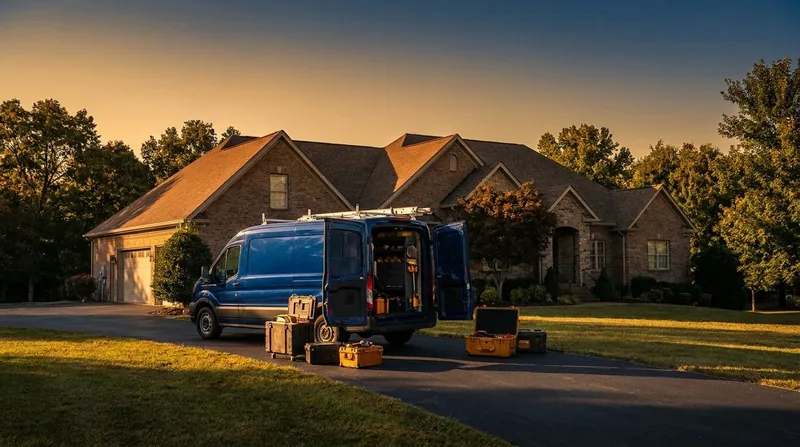
Outfit your vehicle with tool racks, emergency lighting, and magnetic signage displaying your business name and phone number. Many locksmiths operate from their vehicle as their primary workspace, visiting client sites rather than maintaining a dedicated storefront. Organize your tool kit so frequently used items are easily accessible, and stock enough key blanks and rekeying pins to handle common jobs without frequent stops to restock. Set up a simple invoicing system, either on paper or via a mobile app, to track jobs and issue receipts on site.
Step 10: Market Your Business Locally
Set up a simple website with your name, phone number, service area, hours, and rates. Many customers searching for "locksmith near me" or "emergency locksmith [city name]" will find you via local search. Get listed on Google Business Profile, Yelp, and other local directories. Ask satisfied customers for reviews, positive reviews are powerful trust signals in this industry. Consider joining your local chamber of commerce or networking with property managers, real estate agents, and home builders who refer locksmith work. Word-of-mouth referral is the strongest marketing channel for locksmiths.
Tips and Common Mistakes to Avoid
Don't skip training and certification. Some people try to start a locksmith business by watching online videos or reading books alone. Locks are complex mechanical systems, and poor technique will cost you jobs, damage your reputation, and expose you to liability. Invest in real training before you take your first paying customer.
Get insured before your first job. A single incident, accidentally damaging a lock or being accused of theft, can bankrupt an uninsured locksmith. Insurance is not optional; it is a business necessity.
Don't undercharge. Many new locksmiths underprice their work to gain business, but this trains customers to expect low rates and makes it impossible to raise prices later. Research what experienced locksmiths in your area charge for common services (lock rekeying, emergency lockout, lock installation) and price competitively, not by the hour or by guesswork. Publish your pricing so customers know what to expect.
Keep your tools and vehicle maintained. A broken-down vehicle or dull tools will cost you jobs and damage your reputation. Invest in regular maintenance so you show up on time and equipped to do the work.
Verify local requirements. While Missouri has no state locksmith license, some cities have their own permitting or bonding rules. Call your city or county clerk to confirm what you need before spending money on licenses or certifications.
Document your ALOA experience hours carefully. If you plan to pursue ALOA certification, keep detailed records of every locksmith job you perform, what you did, who witnessed it, how long it took. Good records also support your reputation and any insurance or certification applications.
Expected Results and What Comes Next
After you complete the steps above, you will have a functioning locksmith business registered with your city and state, proper insurance in place, and the tools to start taking jobs. Your first 6 to 12 months will be the hardest, building a client base, establishing your reputation, and refining your pricing and workflow. Most new locksmiths rely heavily on emergency calls and referrals early on, so your response time and job quality will directly affect your growth.
With consistent work and good customer reviews, you can expect to build enough steady business to support yourself full-time within a year or two. Many locksmiths eventually hire additional technicians and grow their operation into a multi-person business. Others remain solo operators and build a loyal customer base that generates reliable repeat business and referrals.
Do not expect instant profit. Your first months will likely be spent building tools, learning client management, and creating systems. But if you treat locksmithing as a serious trade, invest in training, maintain your equipment, and show up reliably, it is a stable and rewarding business to build in Missouri.
Disclaimer
This article is informational and is not legal or tax advice. The requirements and fees listed here are accurate as of October 2026, but locksmith regulations, business licensing rules, and tax law change. Before filing any business formation documents or registering for licenses, confirm the current requirements with the Missouri Secretary of State and your local city or county clerk. For complex questions about business structure, tax liability, or insurance coverage, consult a qualified attorney or CPA licensed in Missouri.
Keep exploring: related Missouri guides
- How to Start an HVAC Business in Missouri
- How to Start a Handyman Business in Missouri
- How to Start an Electrical Business in Missouri
- How to Start a Plumbing Business in Missouri
- Missouri Contractor License
- How to Start an LLC in Missouri
- Missouri Business License
- How Much Does It Cost to Start a Business in Missouri
- All Missouri business types
- Every Missouri guide in one place